The Show Windows
2021-2022 | Coventry City of Culture / Mumbai, India
The Brief
Levine was invited by Craig Ashley, then part of Coventry City of Culture and previously curator at mac Birmingham, to develop a feasibility study for a visual arts project in Coventry's shop windows as part of the city's year as UK City of Culture 2021. The brief was relatively simple, to explore what could happen if contemporary art occupied empty and available shop windows across the city.
Levine developed three possible approaches, from a small-scale intervention to a much larger programme, and the largest option was selected. She subsequently developed the project, raised the funding and built the partnerships required to realise it, growing what had begun as a project about art in shop windows into a multi-strand programme spanning public art, heritage, collections, digital platforms, international exchange, artist development and community engagement.
The project eventually brought together artists, architects, heritage organisations, national collections, local partners and international collaborators across Coventry and Mumbai.
Levine developed three possible approaches, from a small-scale intervention to a much larger programme, and the largest option was selected. She subsequently developed the project, raised the funding and built the partnerships required to realise it, growing what had begun as a project about art in shop windows into a multi-strand programme spanning public art, heritage, collections, digital platforms, international exchange, artist development and community engagement.
The project eventually brought together artists, architects, heritage organisations, national collections, local partners and international collaborators across Coventry and Mumbai.
The Window as Frame, Page and Portal
The name The Show Windows came from some lucky associations. While researching the history of shop-window display, Levine discovered L. Frank Baum's The Art of Decorating Dry Goods Windows and Interiors, published in 1900, the same year as the first Wonderful Wizard of Oz book. Baum used the term "show windows" throughout the book, describing the shop window as a carefully constructed space through which objects could be staged, arranged and encountered.
The discovery shifted the way Levine was thinking about the project. The window was not simply a convenient place to put an artwork, but it was a frame, a page and a portal.
This connected directly to Levine's longstanding interest in the frame, originating in her study of photography and the act of cropping. In a photograph, the frame and the viewfinder determines what is seen and what is left outside it; in a shop window, the same principle is true physically and in the public realm. The window frames an artwork, but it also frames the street, the architecture, the people passing by and the stories of the place beyond it.
Levine began to think of the windows as pages in a larger picture book, each one offering an entry point into an artwork, an idea or a story. The phrase "once upon a window..." became part of the project's language, suggesting the window as a point of entry into another world, while also acknowledging its theatrical quality as a constructed scene.
The discovery shifted the way Levine was thinking about the project. The window was not simply a convenient place to put an artwork, but it was a frame, a page and a portal.
This connected directly to Levine's longstanding interest in the frame, originating in her study of photography and the act of cropping. In a photograph, the frame and the viewfinder determines what is seen and what is left outside it; in a shop window, the same principle is true physically and in the public realm. The window frames an artwork, but it also frames the street, the architecture, the people passing by and the stories of the place beyond it.
Levine began to think of the windows as pages in a larger picture book, each one offering an entry point into an artwork, an idea or a story. The phrase "once upon a window..." became part of the project's language, suggesting the window as a point of entry into another world, while also acknowledging its theatrical quality as a constructed scene.
The City as Exhibition Space
The Show Windows extended Levine's site-responsive practice beyond the gallery or individual building and into the wider civic landscape. Rather than treating Coventry as a neutral backdrop for an exhibition, the project responded to its streets, buildings, histories, businesses and communities, using the existing architecture of the city as the framework for the work. The individual windows were points of encounter, but collectively they created a dispersed exhibition that could be discovered through movement around the city.
This became particularly significant during the COVID-19 pandemic. The original idea of using shop windows had already been established before Levine joined the project. Galleries and cultural venues were closed, social distancing had altered how people moved through cities, and the possibility of encountering art without entering a building became unexpectedly important. The windows offered a way of bringing art back onto the high street and into peoples everyday.
They could be encountered accidentally, without a ticket, without prior knowledge of the artist and without having to make the decision to visit a gallery. The project also worked with Quiet Down There to develop engagement with local groups and charities around the City Arcade, extending the programme beyond the artworks themselves. The exhibition therefore operated simultaneously as a collection of individual commissions over a 12 month period, and as an intervention into the experience of the city.
This became particularly significant during the COVID-19 pandemic. The original idea of using shop windows had already been established before Levine joined the project. Galleries and cultural venues were closed, social distancing had altered how people moved through cities, and the possibility of encountering art without entering a building became unexpectedly important. The windows offered a way of bringing art back onto the high street and into peoples everyday.
They could be encountered accidentally, without a ticket, without prior knowledge of the artist and without having to make the decision to visit a gallery. The project also worked with Quiet Down There to develop engagement with local groups and charities around the City Arcade, extending the programme beyond the artworks themselves. The exhibition therefore operated simultaneously as a collection of individual commissions over a 12 month period, and as an intervention into the experience of the city.
Building the Programme
The ambition of the project grew through collaboration. Some of the relationships came through Levine's existing networks, including artists she had worked with through ITV Creates, while others emerged through organisations and partners already connected to Coventry City of Culture. Levine developed further collaborations with Historic England, the Government Art Collection, the British Museum, the Crafts Council and RIBA, alongside local artists, community organisations, universities and cultural partners.
These partnerships were not simply additions to an existing exhibition. They became opportunities to develop new projects within the wider framework. One strand, for example, created opportunities for local artists to submit work for presentation in the windows and subsequently develop residencies with RIBA architectural practices. The project therefore became a way of connecting local artists with an exhibition opportunity with professional development, architecture and the wider creative ecology of the city.
Reflections
The Show Windows: Reflections developed from Levine's interest in local history, heritage and the stories embedded within a place.
Working with Historic England's Tamsin Silvey, the Government Art Collection, the British Museum and the Crafts Council were invited to participate in a project that brought together contemporary artists and historic collections within the City Arcade, a beautiful historic shopping arcade in Coventry that has since been demolished.
Artists were invited to respond to the collections objects, histories and the physical site, creating new encounters between the city's past and present. Quiet Down There worked with local groups and communities around the arcade, while the national collections brought another layer of history into a temporary public setting.
For Levine, this was an important development of the site-responsive approach that had begun much earlier at TROVE. The history of a place was not simply research to be included in interpretation, but something that could actively shape what was commissioned, where it was placed and how audiences encountered it.
The temporary nature of the project also created an unintended archival quality. The windows and artworks documented a site that no longer exists, creating a record of a place through the artists who responded to it.
Working with Historic England's Tamsin Silvey, the Government Art Collection, the British Museum and the Crafts Council were invited to participate in a project that brought together contemporary artists and historic collections within the City Arcade, a beautiful historic shopping arcade in Coventry that has since been demolished.
Artists were invited to respond to the collections objects, histories and the physical site, creating new encounters between the city's past and present. Quiet Down There worked with local groups and communities around the arcade, while the national collections brought another layer of history into a temporary public setting.
For Levine, this was an important development of the site-responsive approach that had begun much earlier at TROVE. The history of a place was not simply research to be included in interpretation, but something that could actively shape what was commissioned, where it was placed and how audiences encountered it.
The temporary nature of the project also created an unintended archival quality. The windows and artworks documented a site that no longer exists, creating a record of a place through the artists who responded to it.
Beyond the Window
The project also expanded beyond Coventry. During the pandemic, Levine worked with the SqW:Lab team to connect The Show Windows to Mumbai, allowing the project to continue internationally and showcase links between groups and communities in Coventry and their links to India.
Working with TARQ, local artists and shopfronts, The Show Windows: Mumbai translated the project into a different city and context. TARQ brought local knowledge, relationships with shop owners and production support, while the artists responded to the particular conditions of Mumbai. Coventry also welcomed two Mumbai based artists for The Show Window's 'International@ month programme.
The project also hosted a significant digital strand. Working with Smartify, audiences could encounter the artworks remotely, while virtual reality experiences allowed aspects of the exhibition to be brought into people's homes at a time when physical access to cultural spaces was restricted.
The digital programme extended an idea that had already been central to Levine's practice: that an exhibition does not have to be contained by its physical location. The physical window could become a screen, while the screen could become another kind of window.
Working with TARQ, local artists and shopfronts, The Show Windows: Mumbai translated the project into a different city and context. TARQ brought local knowledge, relationships with shop owners and production support, while the artists responded to the particular conditions of Mumbai. Coventry also welcomed two Mumbai based artists for The Show Window's 'International@ month programme.
The project also hosted a significant digital strand. Working with Smartify, audiences could encounter the artworks remotely, while virtual reality experiences allowed aspects of the exhibition to be brought into people's homes at a time when physical access to cultural spaces was restricted.
The digital programme extended an idea that had already been central to Levine's practice: that an exhibition does not have to be contained by its physical location. The physical window could become a screen, while the screen could become another kind of window.
A Curatorial Method
The Show Windows marked a significant development in Levine's site-responsive practice, extending the idea of working with a particular building or location into a much wider approach to place.
The project demonstrated that a curatorial programme could operate simultaneously as exhibition, public-realm intervention, partnership framework, engagement programme, artist development opportunity and international exchange, while remaining rooted in the particular character and histories of the places in which it was made.
For Levine, the project confirmed that ambition and specificity do not have to be opposites. A complex programme can involve multiple partners, artists, audiences, locations and forms of engagement without losing its creative integrity or its relationship to place.
It also marked a shift in the scale at which Levine understood her own practice. The question was no longer simply how to respond to a site, but how to construct the conditions for a whole programme to exist within it, bringing together different networks and opportunities while maintaining a clear curatorial proposition. The Show Windows became, in this sense, less an exhibition in shop windows than a way of thinking about how a city might become an exhibition space.
The project demonstrated that a curatorial programme could operate simultaneously as exhibition, public-realm intervention, partnership framework, engagement programme, artist development opportunity and international exchange, while remaining rooted in the particular character and histories of the places in which it was made.
For Levine, the project confirmed that ambition and specificity do not have to be opposites. A complex programme can involve multiple partners, artists, audiences, locations and forms of engagement without losing its creative integrity or its relationship to place.
It also marked a shift in the scale at which Levine understood her own practice. The question was no longer simply how to respond to a site, but how to construct the conditions for a whole programme to exist within it, bringing together different networks and opportunities while maintaining a clear curatorial proposition. The Show Windows became, in this sense, less an exhibition in shop windows than a way of thinking about how a city might become an exhibition space.
Archive
- The Show Windows which consisted of my centrally curated programme, Spotlights on ten local artists, a series of windows by RIBA West Midlands and a Curatorial Network realised in partnership with Coventry University;
- The Show Windows: Reflections a programme co-produced with Historic England with engagement by Quiet Down There who worked with Government Art Collection, British Museum, Crafts Council. We also employed two Assistant Curators as part of this programme and commissioned six local artists to either respond to a collection or alternatively archive the Reflections programme location, City Arcade, Coventry;
- The Show Windows: Mumbai realised in partnership with SqW:lab and Tarq in windows in Colaba, Mumbai
- The Show Windows: Digital was a programme of digital tours, artwork hosting and five new VR artworks in partnership with Smartify.
"Once upon a window…As part of Coventry UK City of Culture 2021, artists, designers, architects and makers are transforming Coventry city centre, turning shop windows into portals to fantasy worlds and mindscapes. These site-specific artworks, framed behind the window glazing, by local and international artists will act as picture book pages and mirrors in which to see new narratives and reflections of ourselves and the city. The Show Windows aims to inspire hope, adventure and imagination, inviting us to rediscover multi-faceted Coventry, ever-evolving and home to diverse and creative communities and businesses, and its people.
The Show Windows is inspired by Wizard of Oz author L. Frank Baum’s book about shop window design. I selected Baum’s term, ’show windows’ as the inspiration behind the project and included it as a main point of reference in the brief to architects and artists. Specifically asking them to create immersive pieces that invite audiences to journey to other places, and to celebrate the locations and people that will help us display the artworks.
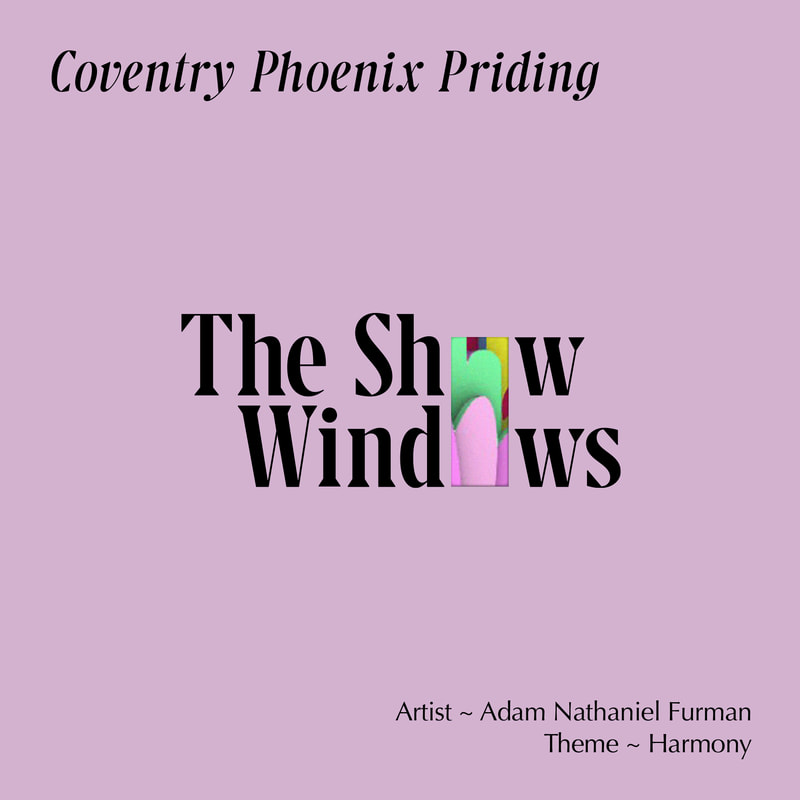
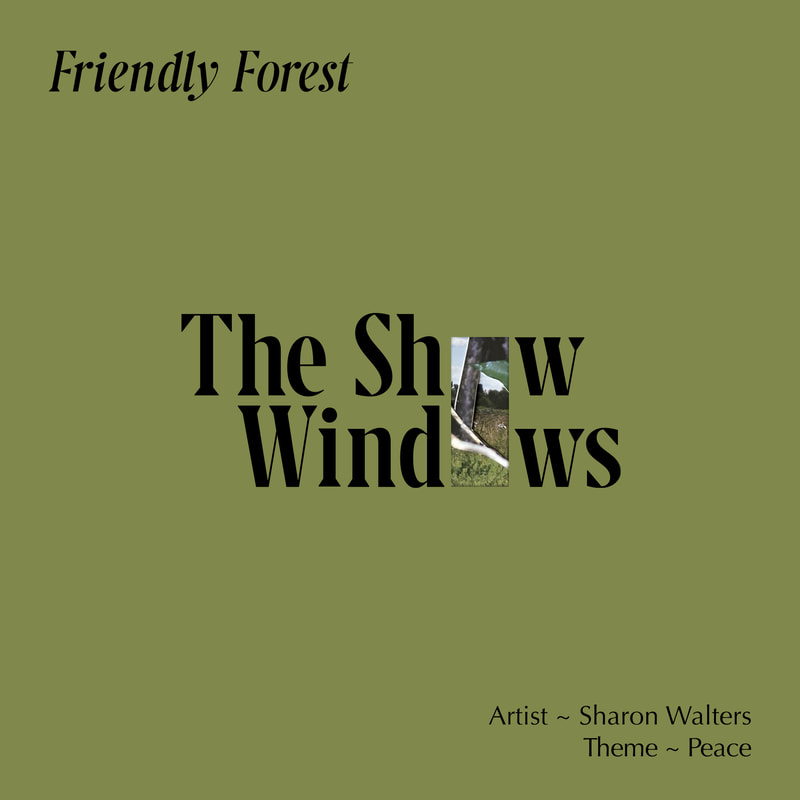
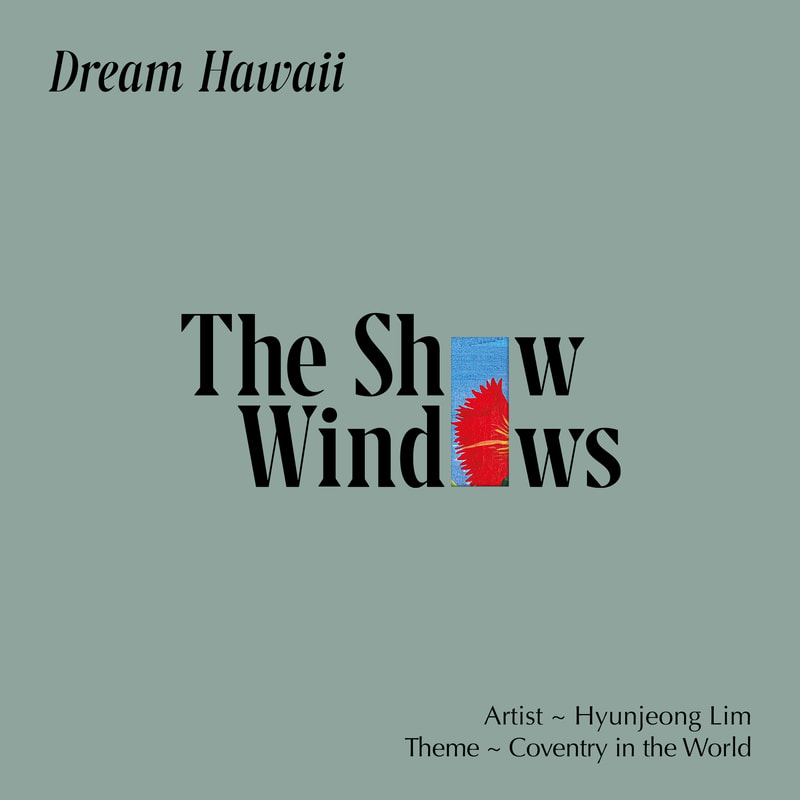
The identity For The Show Windows was developed with Curious Ways with the font also being inspired by the L Frank Baum book. Each window got its own assets that revealed the windows / artworks in line with the reveal felt by those passing by the windows and moving around the city."
- The Show Windows: Reflections a programme co-produced with Historic England with engagement by Quiet Down There who worked with Government Art Collection, British Museum, Crafts Council. We also employed two Assistant Curators as part of this programme and commissioned six local artists to either respond to a collection or alternatively archive the Reflections programme location, City Arcade, Coventry;
- The Show Windows: Mumbai realised in partnership with SqW:lab and Tarq in windows in Colaba, Mumbai
- The Show Windows: Digital was a programme of digital tours, artwork hosting and five new VR artworks in partnership with Smartify.
"Once upon a window…As part of Coventry UK City of Culture 2021, artists, designers, architects and makers are transforming Coventry city centre, turning shop windows into portals to fantasy worlds and mindscapes. These site-specific artworks, framed behind the window glazing, by local and international artists will act as picture book pages and mirrors in which to see new narratives and reflections of ourselves and the city. The Show Windows aims to inspire hope, adventure and imagination, inviting us to rediscover multi-faceted Coventry, ever-evolving and home to diverse and creative communities and businesses, and its people.
The Show Windows is inspired by Wizard of Oz author L. Frank Baum’s book about shop window design. I selected Baum’s term, ’show windows’ as the inspiration behind the project and included it as a main point of reference in the brief to architects and artists. Specifically asking them to create immersive pieces that invite audiences to journey to other places, and to celebrate the locations and people that will help us display the artworks.
The identity For The Show Windows was developed with Curious Ways with the font also being inspired by the L Frank Baum book. Each window got its own assets that revealed the windows / artworks in line with the reveal felt by those passing by the windows and moving around the city."
Commissioned artists (in order of appearance): Ben Javens, MAMIMU (June Smithson-Mineyama), Adam Nathaniel Furman, Sharon Walters, Jack Foulks, Sameer Kulavoor, Vishwa Shroff, Evans Mbugua, Yermine Richardson, Hyunjeong Lim, NEON, Liz West, Erin Aniker, Ashton Attzs, Katrina Adams, Kemi Onabule and Karen McLean.
Spotlight on local artists, selected via an open call, included (in order of appearance): Sadie Aspinall, Matt Chinn, Gary Eite, Michala Gyventai, Tammy Woodrow, Tom Godwin, Indira Lakshmi, Polly Merredew, Tarla Patel, Theo Wright.
Poet and Sound artists commissioned via an open call included: Sujatha Menon, Lib Oration featuring Jenny Egerton, Emilie Lauren Jones, Chris Fernandez, Theo Ioannou, Alison Manning, Nick Knibb aka The Archbishop, Indira Lakshmi (Lucifer Sky), Alexandra Johnson, and Steve Jones (Stylusboy).
RIBA West Midlands commissioned architects: Gensler, One Creative Environments, Intervention Architecture and Ella and Abby Clarke.
RIBA Schools windows by: Mili Karia, age 6, Earlsdon Primary School, Stella Whelan, age 13, Coundon Court, and Franco Poretta, age 9 from Holy Family School.
RIBA and Birmingham Architects Association windows by: Priya Addanki, Ola Adeyemi and Jake Obichere, and Year 13 Graphics Group, Blue Coat School, Coventry.
Historic England commissioned artists: Edie Jo Murray, Lorsen Camps, Jo Gane, Francesca Robson, Martin Green and Tom Edwards.
Historic England partnership with: Government Art Collection curated by Carriers of Hope, British Museum curated by Positive Choices, and Crafts Council curated by Coffee Tots.
The Show Windows: Mumbai with Tarq Gallery and SqW:Lab, featuring artists: Avantika Bawa, Emma Critchley, Mario d’Souza, Ranjit Kandalgaonkar, Samanta Batra Mehta, and Tarla Patel
Spotlight on local artists, selected via an open call, included (in order of appearance): Sadie Aspinall, Matt Chinn, Gary Eite, Michala Gyventai, Tammy Woodrow, Tom Godwin, Indira Lakshmi, Polly Merredew, Tarla Patel, Theo Wright.
Poet and Sound artists commissioned via an open call included: Sujatha Menon, Lib Oration featuring Jenny Egerton, Emilie Lauren Jones, Chris Fernandez, Theo Ioannou, Alison Manning, Nick Knibb aka The Archbishop, Indira Lakshmi (Lucifer Sky), Alexandra Johnson, and Steve Jones (Stylusboy).
RIBA West Midlands commissioned architects: Gensler, One Creative Environments, Intervention Architecture and Ella and Abby Clarke.
RIBA Schools windows by: Mili Karia, age 6, Earlsdon Primary School, Stella Whelan, age 13, Coundon Court, and Franco Poretta, age 9 from Holy Family School.
RIBA and Birmingham Architects Association windows by: Priya Addanki, Ola Adeyemi and Jake Obichere, and Year 13 Graphics Group, Blue Coat School, Coventry.
Historic England commissioned artists: Edie Jo Murray, Lorsen Camps, Jo Gane, Francesca Robson, Martin Green and Tom Edwards.
Historic England partnership with: Government Art Collection curated by Carriers of Hope, British Museum curated by Positive Choices, and Crafts Council curated by Coffee Tots.
The Show Windows: Mumbai with Tarq Gallery and SqW:Lab, featuring artists: Avantika Bawa, Emma Critchley, Mario d’Souza, Ranjit Kandalgaonkar, Samanta Batra Mehta, and Tarla Patel
|
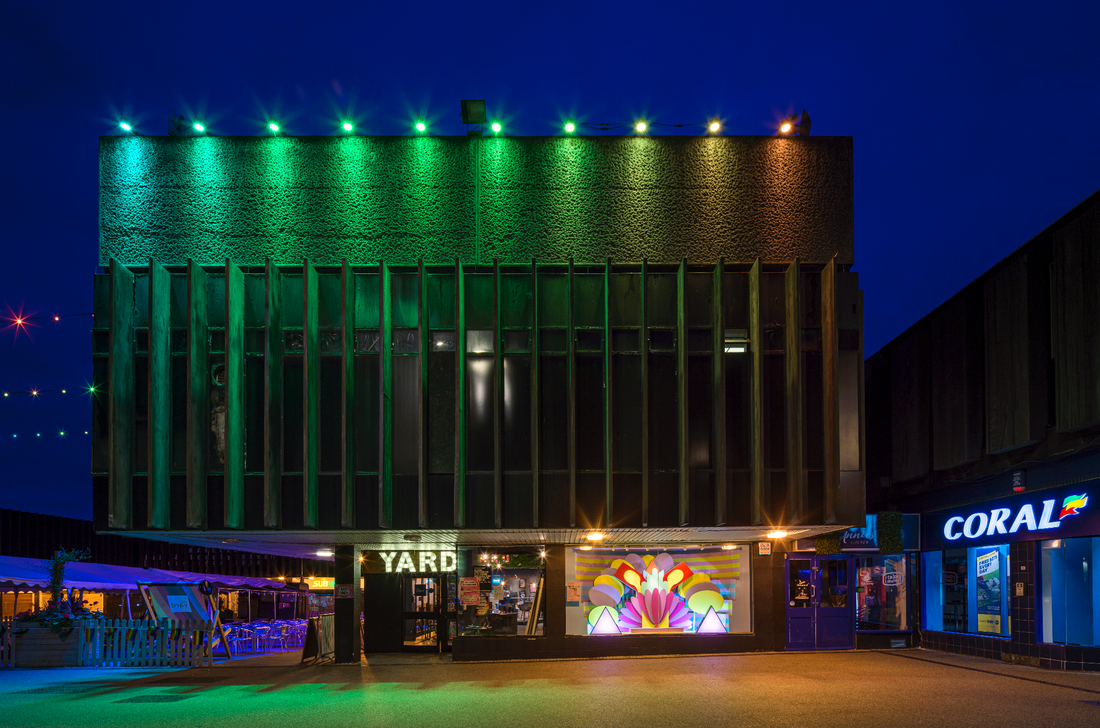
Find out more about a series of window installations I curated in Coventry for December 2020 with commissioned artwork by Ana Jaks here >>
|