TROVE
2009–2013 | Birmingham | Founder & Director
TROVE was an independent contemporary art gallery established by Charlie Levine inside a former industrial museum in Birmingham's Jewellery Quarter. Between 2009 and 2013, Levine developed an experimental programme shaped by the building's history, material conditions and uncertain future.
An independent gallery created inside a former industrial museum in Birmingham's Jewellery Quarter
TROVE began in 2009 inside the former Old Science and Industry Museum in Birmingham's Jewellery Quarter. The building was a listed former industrial site, originally associated with the Elkington Silver Electroplating Works, and was being offered for sale when the gallery opened.
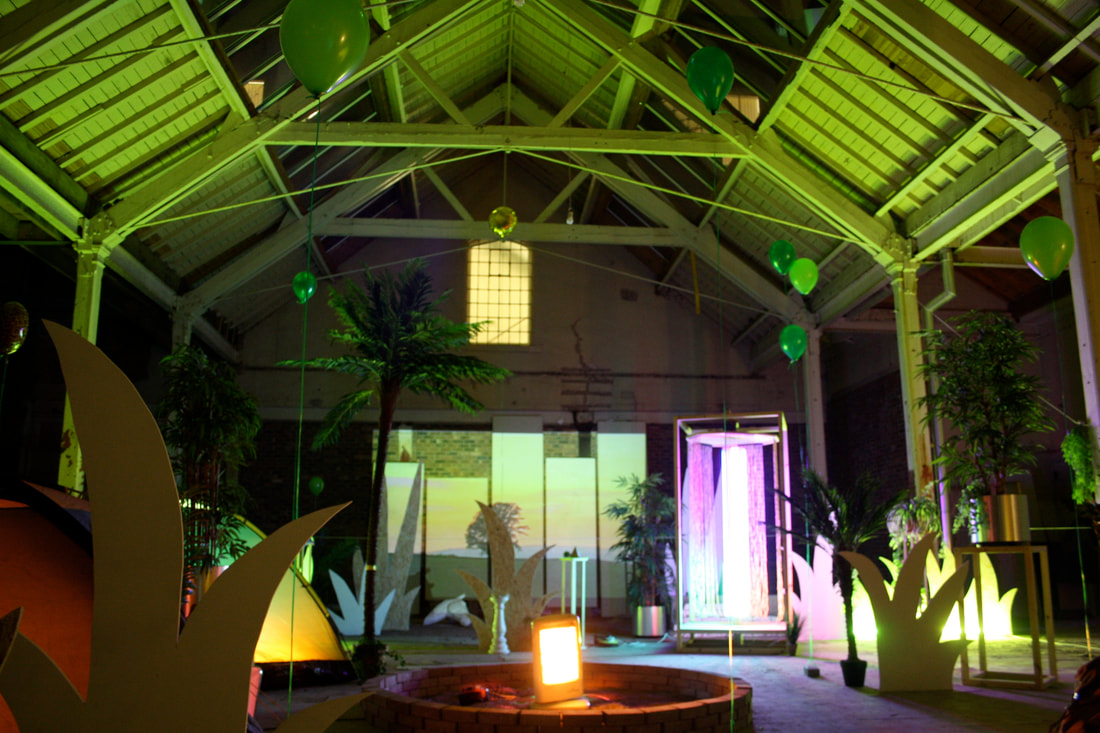
It was not a conventional gallery space. It was a shell: dusty, with uneven flooring and without electricity or running water. The building's industrial history remained physically present in its floors, pillars, brickwork, paintwork and architectural remnants. Rather than attempting to neutralise the space, TROVE developed a programme that worked with what was already there.
The Site
The architecture shaped almost every aspect of the programme.
With no budget to build conventional gallery infrastructure, existing features became part of the exhibition design. A single solid wall could not be drilled into, so works were often hung from existing holes and nails, producing deliberately uneven arrangements. Original bricks that could not be removed from the listed building became plinths. Raised sections of floor, originally used for displaying large engines and trains, became stages for performances and platforms for sculpture.
Lighting was similarly improvised. Long leads were thrown over the exposed ceiling bars and repositioned for each exhibition, often ending in a single exposed bulb.
The building was not a backdrop to the exhibitions. It was part of the work.
With no budget to build conventional gallery infrastructure, existing features became part of the exhibition design. A single solid wall could not be drilled into, so works were often hung from existing holes and nails, producing deliberately uneven arrangements. Original bricks that could not be removed from the listed building became plinths. Raised sections of floor, originally used for displaying large engines and trains, became stages for performances and platforms for sculpture.
Lighting was similarly improvised. Long leads were thrown over the exposed ceiling bars and repositioned for each exhibition, often ending in a single exposed bulb.
The building was not a backdrop to the exhibitions. It was part of the work.
Curating Through Constraint
TROVE's lack of infrastructure became a form of creative problem-solving. The first exhibition, a video project by Sam Smith, required electricity that did not exist in the building. Power was borrowed from the pub next door, using two extension cables running from an upstairs apartment. The arrangement was paid for in Krispy Kremes.
As the gallery developed, the physical constraints of the building continued to generate unusual curatorial decisions. Artists responded to its industrial history, its location in the Jewellery Quarter, its materials and surfaces, and the traces of previous uses.
For Au & Ag, Vicky Cull and Justine Moss worked with the histories of gold and silver production in the area, including the metal dust embedded in the floors of local factories. Ten kilograms of silver glitter were poured into the gallery entrance by Cull, where it remained embedded in the dusty floor throughout the life of the gallery.
They Are Here responded to the building's painted pillars, carefully scratching and peeling the surface to reveal the deep maroon paint beneath the beige, tracing subtle maps of the world's two largest gold and silver mining countries. In the same exhibition, a performer dressed as a magpie searched the gallery for silver, collecting fragments of metal and glitter.
Zoe Williams made small interventions into the building's irregularities, including a brass disc fitted precisely into a circular hole in the floor, while Vishwa Shroff filled cracks and breaks in the floor with coloured chalk, echoing the tiled floors of the Margaret Street School of Art where she had studied.
The site created the conditions for these works. It also created the conditions for looking.
The scale and history of the building were often the first thing visitors encountered. The curatorial challenge was not to compete with that, but to move the viewer from the macro experience of the space towards the smaller discoveries within it.
As the gallery developed, the physical constraints of the building continued to generate unusual curatorial decisions. Artists responded to its industrial history, its location in the Jewellery Quarter, its materials and surfaces, and the traces of previous uses.
For Au & Ag, Vicky Cull and Justine Moss worked with the histories of gold and silver production in the area, including the metal dust embedded in the floors of local factories. Ten kilograms of silver glitter were poured into the gallery entrance by Cull, where it remained embedded in the dusty floor throughout the life of the gallery.
They Are Here responded to the building's painted pillars, carefully scratching and peeling the surface to reveal the deep maroon paint beneath the beige, tracing subtle maps of the world's two largest gold and silver mining countries. In the same exhibition, a performer dressed as a magpie searched the gallery for silver, collecting fragments of metal and glitter.
Zoe Williams made small interventions into the building's irregularities, including a brass disc fitted precisely into a circular hole in the floor, while Vishwa Shroff filled cracks and breaks in the floor with coloured chalk, echoing the tiled floors of the Margaret Street School of Art where she had studied.
The site created the conditions for these works. It also created the conditions for looking.
The scale and history of the building were often the first thing visitors encountered. The curatorial challenge was not to compete with that, but to move the viewer from the macro experience of the space towards the smaller discoveries within it.
An Experimental Programme
TROVE's programme was intentionally provisional.
Because the building was for sale, there was no certainty that the gallery would exist beyond the immediate future. Exhibitions were rarely programmed more than three months ahead. Rather than limiting the programme, this allowed it to remain responsive to encounters, conversations and opportunities as they emerged.
Many of the artists came through informal connections, experimentation or conversations rather than a conventional commissioning process. An encounter could become an exhibition only months later.
WUNDERKAMMER by Elly Clarke began with a meeting in a coffee shop, introduced through a mutual friend. A few months later, Clarke's suitcase-based WUNDERKAMMER, a travelling collection of artworks that she carried around the world, was installed at TROVE, with Birmingham-based artists added to the collection.
This way of working created a programme in which artists could experiment, learn and test ideas, sometimes developing work specifically through the encounter with the building. The programme reflected something of the site's own history: a place associated with making, experimentation, industry and the movement of materials.
Because the building was for sale, there was no certainty that the gallery would exist beyond the immediate future. Exhibitions were rarely programmed more than three months ahead. Rather than limiting the programme, this allowed it to remain responsive to encounters, conversations and opportunities as they emerged.
Many of the artists came through informal connections, experimentation or conversations rather than a conventional commissioning process. An encounter could become an exhibition only months later.
WUNDERKAMMER by Elly Clarke began with a meeting in a coffee shop, introduced through a mutual friend. A few months later, Clarke's suitcase-based WUNDERKAMMER, a travelling collection of artworks that she carried around the world, was installed at TROVE, with Birmingham-based artists added to the collection.
This way of working created a programme in which artists could experiment, learn and test ideas, sometimes developing work specifically through the encounter with the building. The programme reflected something of the site's own history: a place associated with making, experimentation, industry and the movement of materials.
Beyond the Gallery
Although TROVE was rooted in a single room, the practice quickly extended beyond it.
The programme activated other spaces across the site, including the courtyard and an unused office, while artists also worked in a listed building across the courtyard that was largely closed because of its condition. Projects extended into other locations across Birmingham and beyond, including the Birmingham Municipal Bank, mac birmingham, Edible Eastside, FarGo and other independent and institutional spaces.
TROVE became less a fixed gallery than a platform for making exhibitions wherever an opportunity, artist or idea could be brought into relation with a place. This approach extended into larger-scale projects including Creative Machines at Curzon Street Station and Thrift Radiates Happiness at Birmingham's Municipal Bank.
The programme activated other spaces across the site, including the courtyard and an unused office, while artists also worked in a listed building across the courtyard that was largely closed because of its condition. Projects extended into other locations across Birmingham and beyond, including the Birmingham Municipal Bank, mac birmingham, Edible Eastside, FarGo and other independent and institutional spaces.
TROVE became less a fixed gallery than a platform for making exhibitions wherever an opportunity, artist or idea could be brought into relation with a place. This approach extended into larger-scale projects including Creative Machines at Curzon Street Station and Thrift Radiates Happiness at Birmingham's Municipal Bank.
A Curatorial Method
TROVE established principles that continue to shape Levine's practice: responding to the histories and material conditions of a site; treating architectural constraints as creative possibilities; allowing the frame of an exhibition to remain visible; developing programmes through conversation and encounter; and working responsively rather than attempting to predetermine every outcome.
It also established a belief that the role of the curator is not always to impose a programme on a space, but to listen to what the space, the artists and the circumstances make possible.
The result was a programme that was experimental by necessity as much as by design, and which treated the exhibition as a place for discovery, exchange and possibility.
It also established a belief that the role of the curator is not always to impose a programme on a space, but to listen to what the space, the artists and the circumstances make possible.
The result was a programme that was experimental by necessity as much as by design, and which treated the exhibition as a place for discovery, exchange and possibility.
Archive
2009-2013 | 40+ exhibitions | 149 artists
TROVE's programme was inspired by its site, that of the Old Science and Industry Museum, Birmingham, between 1951 and 1997, and Elkington Silver Electroplating Works, a metal plating factory built in 1838.
Artists exhibited at TROVE include: Matthew Andrew, Ron Athey, Jane Ball, Sophie Bancroft, Darren Banks, Ana Benlloch, Juan Bethancurth, Liz Bradshaw, Jessica Brouder, Steph Bryant, Rachel Blake Butler, Tom Butler, Darrell Buxton, Marvin Gaye Chetwynd, Graham Chorlton, Elly Clarke, Michael Clulee, Caroline Colinge, Michael Collins, Stephen Cornford, Tom Crawford, Emilie Crewe, Martyn Cross, Vicky Cull, Rosie Cull, Benedict Davenport, Claire Davies, Ravi Deepres, Coco Deville, Sara Dobson, Annabel Dover, Tracey Eastham, Julian Eicke, Kate Farley, Paula Feijoo, Liz Fletcher, Rebecca Foster, Anna Francis, Anneka French, Jo Gane, Sheila Ghelani, James Gill, Alastair Grant, Caitlin Griffiths, Helen Grundy, Anne Guest, Gabo Guzzo, Ellie Harrison, Alexander Heaton, Liz Hingley, Lulu Horsfield, Ryan Hughes, Hannah Humphries, Jaime Jackson, Victoria Jenkins, Adrian Johnson, Dominic Johnson, Anna-Myga Kasten, Markus Kayser, David Kefford, Will Kendrick, Callum F Kerr, Hannah Kershaw, Matthew Krishanu, David Lehan, David Lee, Alistair Levy, Hayley Lock, Renaulda Loda, David Mackintosh, MadeScapes^, MAMA, Craig Marchington, Maria Mattos, Wendy Mayer, Duncan McKellar, Karen McLean, Brigid McLeer, Milgram, Milk, Two Sugars, David Miller, Deborah Mingham, Kate Morrison, Malcolm Moseley, Justine Moss, Stuart Mugridge, Rob Mullender, Sheldon Nadelman, Paul Newman, Kira O’Reilly, Bharti Parmar, Sally Payen, Alex Pearl, Richard Peel, Terry Piercey, plan b, Wang Qingsong, Joshua Rackstraw, John Rixon, Tim Robottom, Matthew Robinson, Ben Rowe, David Ruffles, Daniel Salisbury, Polly Saunders, Bronia Sawyer, Martin Sexton, Elizabeth Short, Christian Sievers, Laura Skinner, Sam Smith, Helen Snell, Viv Sole, Sarah Sparkes, Sparrow+Castice, Emily Speed, Kate Spence, Vajra Spook, Vishwa Shroff, Lee Stowers, Stuart Tait, They Are Here, Tomonaga Tokuyama, Julie Tsang, James Turner, Sam Underwood, Uninvited Guests, Steve Vardell, Samantha Voong, E. Louise Wachler, Cathy Wade, Edward Wakefiled, Emmett Walsh, Kym Ward, Matt Webb, Michael Valentine West, Luke Williams, Zoe Williams, Lucy Wilson, Nicole Wilson, Andrea Winkler, Daniel Worrallo, Caroline Wright, Mary Yacoob, Jennifer Zoellner, Adam Zoltowski
Co-curators include: Kate Spence, Morgan Quaintance, Antonio Roberts, David Miller, Sophie Bancroft, Daniel Salisbury and Elly Clarke.
TROVE's programme was inspired by its site, that of the Old Science and Industry Museum, Birmingham, between 1951 and 1997, and Elkington Silver Electroplating Works, a metal plating factory built in 1838.
Artists exhibited at TROVE include: Matthew Andrew, Ron Athey, Jane Ball, Sophie Bancroft, Darren Banks, Ana Benlloch, Juan Bethancurth, Liz Bradshaw, Jessica Brouder, Steph Bryant, Rachel Blake Butler, Tom Butler, Darrell Buxton, Marvin Gaye Chetwynd, Graham Chorlton, Elly Clarke, Michael Clulee, Caroline Colinge, Michael Collins, Stephen Cornford, Tom Crawford, Emilie Crewe, Martyn Cross, Vicky Cull, Rosie Cull, Benedict Davenport, Claire Davies, Ravi Deepres, Coco Deville, Sara Dobson, Annabel Dover, Tracey Eastham, Julian Eicke, Kate Farley, Paula Feijoo, Liz Fletcher, Rebecca Foster, Anna Francis, Anneka French, Jo Gane, Sheila Ghelani, James Gill, Alastair Grant, Caitlin Griffiths, Helen Grundy, Anne Guest, Gabo Guzzo, Ellie Harrison, Alexander Heaton, Liz Hingley, Lulu Horsfield, Ryan Hughes, Hannah Humphries, Jaime Jackson, Victoria Jenkins, Adrian Johnson, Dominic Johnson, Anna-Myga Kasten, Markus Kayser, David Kefford, Will Kendrick, Callum F Kerr, Hannah Kershaw, Matthew Krishanu, David Lehan, David Lee, Alistair Levy, Hayley Lock, Renaulda Loda, David Mackintosh, MadeScapes^, MAMA, Craig Marchington, Maria Mattos, Wendy Mayer, Duncan McKellar, Karen McLean, Brigid McLeer, Milgram, Milk, Two Sugars, David Miller, Deborah Mingham, Kate Morrison, Malcolm Moseley, Justine Moss, Stuart Mugridge, Rob Mullender, Sheldon Nadelman, Paul Newman, Kira O’Reilly, Bharti Parmar, Sally Payen, Alex Pearl, Richard Peel, Terry Piercey, plan b, Wang Qingsong, Joshua Rackstraw, John Rixon, Tim Robottom, Matthew Robinson, Ben Rowe, David Ruffles, Daniel Salisbury, Polly Saunders, Bronia Sawyer, Martin Sexton, Elizabeth Short, Christian Sievers, Laura Skinner, Sam Smith, Helen Snell, Viv Sole, Sarah Sparkes, Sparrow+Castice, Emily Speed, Kate Spence, Vajra Spook, Vishwa Shroff, Lee Stowers, Stuart Tait, They Are Here, Tomonaga Tokuyama, Julie Tsang, James Turner, Sam Underwood, Uninvited Guests, Steve Vardell, Samantha Voong, E. Louise Wachler, Cathy Wade, Edward Wakefiled, Emmett Walsh, Kym Ward, Matt Webb, Michael Valentine West, Luke Williams, Zoe Williams, Lucy Wilson, Nicole Wilson, Andrea Winkler, Daniel Worrallo, Caroline Wright, Mary Yacoob, Jennifer Zoellner, Adam Zoltowski
Co-curators include: Kate Spence, Morgan Quaintance, Antonio Roberts, David Miller, Sophie Bancroft, Daniel Salisbury and Elly Clarke.
TROVE also realised various offsite projects at Curzon Street Station, Birmingham's Municipal Bank, mac birmingham, Edible Eastside, DownStairs Gallery, FarGo, The Burlington Fine Art Club, Coexist and ARC.
TROVE was an independent art gallery who worked with and in partnership with Sluice__, Fierce Festival, Hereford Photography Festival, Hedge Enquiry, Museum of Lost Heritage, Birmingham Architects Association, RIBA, Birmingham City Council, Clarke Gallery, Birmingham City University and Crowd 6.